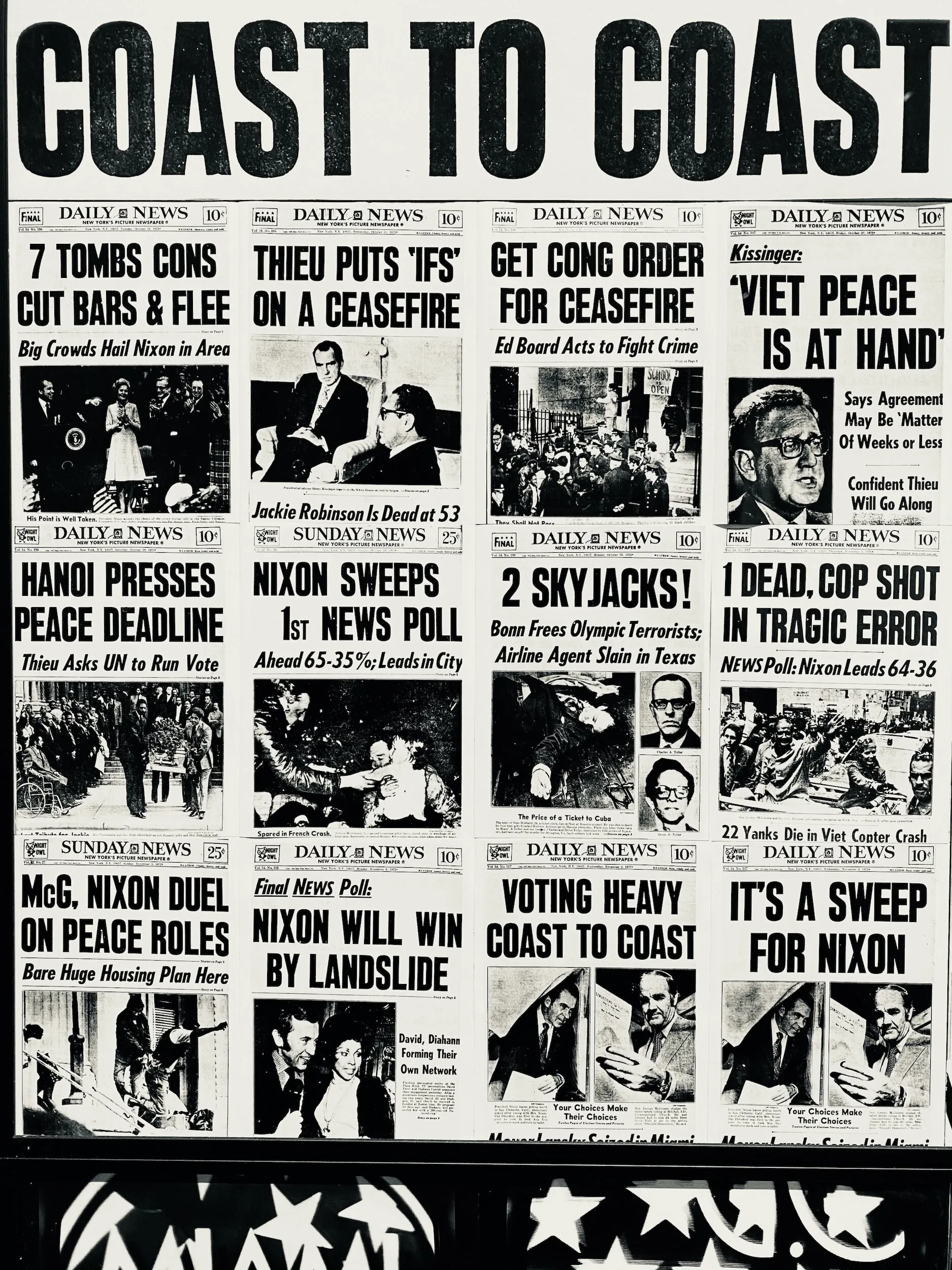
A press release headline states what happened, in the fewest words that still make sense to somebody outside your company. Under 100 characters, active voice, the news first and the company second, no adjectives. The test is simple: if a journalist copied your headline into their publication unchanged, would it be a usable headline? Most press release headlines fail that test because they announce that an announcement is being made rather than saying what occurred.
The rules
Say what happened, not that something happened. "Company X Announces New Partnership" contains no information. "Company X Will Supply Batteries to [Named Customer] From March" does.
Under 100 characters. Longer gets truncated in search results, email subject lines and aggregator feeds — which is where most people will encounter it.
Active voice, present or simple past. "Launches", not "Is Pleased to Announce the Launch Of".
News first, company second where the news is stronger than the name. If you are not a household name, the interesting thing should lead.
No adjectives. Revolutionary, innovative, leading, groundbreaking, seamless, cutting-edge. Each one costs credibility and none add information.
One idea. If the headline needs a semicolon, it contains two announcements and should be two releases or a narrower headline.
Include the number if you have one. Specificity is what makes a headline feel real.
Before and after
Announcement of a funding round
Before: TechCo Is Excited to Announce the Successful Closing of Its Series B Funding Round Led by Prominent Investors
After: TechCo Raises $40M to Expand Grid Storage Manufacturing
The first says a thing occurred. The second says what and why it matters, in 55 characters, including spaces
Before: InnovateCorp Unveils Revolutionary New AI-Powered Platform to Transform Enterprise Workflows
After: InnovateCorp Launches Tool That Cuts Invoice Processing From 6 Days to 4 Hours
Adjectives removed, claim made specific and checkable.
Partnership
Before: LeadingCo and PartnerCo Enter Into Strategic Partnership Agreement
After: PartnerCo Will Run Payments for LeadingCo's 2,000 UK Merchants
Names the actual change. A partnership headline without one is why partnership releases get ignored.
Executive hire
Before: GrowthCo Is Thrilled to Welcome Jane Smith as Its New Chief Revenue Officer
After: Former [Named Company] CRO Jane Smith Joins GrowthCo
The interesting fact is where she came from, not that you are thrilled.
Research or data
Before: New Study From ResearchCo Reveals Interesting Insights Into Consumer Behaviour
After: 68% of Contractors Discover Margin Loss Only After a Job Closes, Survey Finds
The number is the headline. This is the strongest release format there is and the one most companies write worst.
The subhead
One sentence, up to about 150 characters, adding the second most important fact. It is not a place to reintroduce the adjectives you removed.
TechCo Raises $40M to Expand Grid Storage Manufacturing Series B led by [Investor] will fund a second production line in Nevada, doubling annual output by 2027.
What headlines cannot do
A good headline will not make a reporter care about news that does not affect anyone. Headline writing is compression, not persuasion — and a press release is not what makes a journalist interested in the first place.
Press releases are useful for putting something on the record in a citable form, for disclosure, and for search footprint. They do not generate reporter interest, and syndicated republication is not coverage. What produces coverage is a person emailing a journalist who covers that specific subject.
For context: between December 2025 and August 2026, 63% of graded replies to our direct outreach were a yes. None of that came from a wire.
Headlines and AI answers
One change worth knowing. AI systems summarising a topic pull heavily from headlines and opening sentences. A peer-reviewed study of generative-engine optimisation (KDD 2024) found that adding direct quotations, statistics and cited sources measurably improved how often a page was surfaced in generative answers — by up to 40% on the authors' benchmark, with the size of the effect varying by subject area.
A headline built around a specific number is now more likely to be the version repeated back to someone asking about your category. "68% of contractors discover margin loss after a job closes" survives summarisation. "Leading provider announces innovative platform" does not, because there is nothing in it to carry.
Quick checklist
- Under 100 characters?
- Would a journalist use it unchanged?
- Does it say what happened, not that something was announced?
- Active voice?
- Zero adjectives?
- One idea?
- Is the number in it, if you have one?
The short version
- Say what happened. "Announces" is not news.
- Under 100 characters, active voice, no adjectives, one idea.
- Lead with the number whenever you have one.
- The test: would a journalist run your headline unchanged?
- Headlines compress news. They do not create interest — outreach does.
- Number-led headlines survive AI summarisation. Adjective-led ones vanish.
Salient PR runs earned media programmes for technology companies. Outreach figures come from our own database covering December 2025 to August 2026.
Sources
- Salient PR outreach database, Dec 2025 – Aug 2026
- Aggarwal et al., GEO: Generative Engine Optimization, KDD
If you want the headline written by someone who pitches for a living — Salient PR is a technology PR agency working with technology companies. See how we work or start a conversation.
Related reading
About Salient PR
Salient is a B2B tech PR agency. We help startups become the story — landing tier-one coverage, building executive visibility, and turning attention into pipeline.
Senior team. No hand-offs. Radical transparency. If you’re ready to talk, reach out.
How to write a press release headline that survives editing, with before-and-after examples and the structural rules that matter. From a working PR agency.